Monday, January 24, 2011

Vocation

Ben Podnar 
24 January 2011
Professors Ribeiro and Ribeiro
Developing a Christian Mind C.S. Lewis

Vocation

Disclaimer: This essay will be an expansion on a point I have previously made about vocation. Looking back on all of the topics we have covered in this class, I feel that it is the most applicable, and that I will learn the most from putting things together in order to learn more about it. Some of the work will be copied from the original post if I feel that it is up to the standard of this essay, other parts of it will be rewritten, and others thrown out. Attempting to integrate every piece of information that has been read over the course of interim to an essay about vocation would be cluttering, so instead only relevant topics will be used.

As Christians we love the idea of “vocation.” This puts the name to what we are all searching for: a way that we can productively work with our abilities to help God with his plan here on earth. This is our meaning in life. A message I heard at Mars Hill in Michigan recently, was that all of life is going to be washed away when God comes back, all creation, all everything; all that will be left, is us. How true can that point be? Where do we find any use in anything after a message like that? I would like to debate with the pastor on this issue, that the way he presented things left no room for a useful vocation. God wills to use us in our lives for the purpose of converting others to his name. When we see a piece of artwork as something that is neat for one moment, but that will inevitably be destroyed, we are seeing this in the wrong light. That piece, will be one miniscule part of the way another person formulates how they think about the world. What we do in this world is not done for an immediate visual, but instead for the effect it has on people. People are the things that will be left in the end. When God comes to wash away everything, we will still be here. Vocation is finding a place in this world through which God can use you to affect other people; we can learn about it through C.S. Lewis' essays, Calvin College's programs, and Plantinga's writings.

God wants us all to do our part in creation. He has specific plans for everyone, and that leads to us playing roles in his kingdom. The way that we approach those roles will strongly be affected by how we understand things around us. Do we look at or along them? C.S. Lewis in “Meditation in a Toolshed” describes the ideas of at and along. Looking at something is like looking at a Native American doing a rain dance, and seeing it from the critical perspective of how little it may actually affect the weather around him. Looking along something is like looking through the standpoint of that Native American, feeling as if there is a complete power that is coursing through, in order to bring rain the next year.

In order to find what our vocations are, we need to be willing to look both at and along things. Because, as C.S. Lewis mentions, we can never completely remove ourselves from the equation, we have to make sure to look at if from all possible perspectives within it. What this will give is the clarity of any issue, by making sure that you are feeling each perspective, you are gaining a clear pathway for what your decision should be. God's guidance is not always clear or easy to follow. Generally it is quite surreptitious, but still we have to try to find it in whatever ways we can. Making sure we are looking for our vocations, but not completely devoting ourselves to it is important, because it could in turn become a vice. A vocation is an opportunity that comes to you, and by preparing yourself through opening your mindset and being prepared for it, you can hop right on the train riding on tracks forged in the direction they are meant to be.

Vocation is Calvin College's favorite word. Yes, that is a bold statement, but let us think about how coming to such a conclusion makes sense. To start with, we have all of the beginning of the year quest orientation, in which you are ensured that you have time to, but need to choose your vocation. Then students are moved on to Prelude in which they are taught a lot about integrating faith, school, and a liberal arts education. All of which end up pointing to vocation. I would say all the talk of vocation actually is helpful to the average student, but that does not change my initial point. Vocation is the word of Calvin.

From Quest I have learned that vocation is not definite. God does not always say "This is what you will be doing for the rest of your life." It is very rarely as simple as that. When in a meeting with most of the sociology and social work professors, they went around the room explaining where they had all been before teaching at Calvin. The variety of each one was immense. There really was no framework for them to follow, each took a unique path. If we choose to follow, God may not lead us down a direct path, but He will take us to where we should be.

From Prelude I have learned that vocation is something that needs faith and prayer. Faith is sort of a given in vocation. That is, our "destined position in the future" is based on our faith in God. Faith is hard though, and sometimes prayers don't seem to be answered. But praying is a necessity in this equation. Learning to pray to God for guidance and advice is key. Prayers are often indirect communication, but sometimes are even a direct way that God will talk to us, telling us where to go.

In the concluding parts of Developing a Christian Mind, we heard Prof. L. Smit closing off the last introductory course to Calvin. To focus on one specific point, she talked about how to gauge our work. Using the following graph, there are two possible options for the wrong ways of using or not using the gifts God gave you. Option A2 is to not challenge yourself enough based on your skill level; option A3 is to challenge yourself too hard for your skill level. 

In order to do things the way God intended, we have to work to our potential. That does not include pushing ourselves to anxiety, or letting ourselves slip into boredom, but rather finding a spot in the “Flow Channel” in which we are challenged to our skill's potential.

Plantinga in “Engaging God's World” clearly writes that as images of God we have responsibilities (those being vocations), but that they should learn to coexist with those of other Christians. We should not be easily broken standpoints that bend to the will of those around us, but with discernment at our sides, we should use each vocation as one small part of a gigantic web. This means two things.

Firstly, we have to find our own kingdom. This is another way of talking about our vocation. Our kingdom is what we have been given stewardship over. God gives us each responsibilities in order to better serve his kingdom. These responsibilities can change over time, and we have to be prepared for them to, but not weaken our grasp on what is currently our responsibility. We have to find the balance between maintaining control of what we already have, while being ready to move on to further new roles we may be given.

Secondly, we have to find how our kingdom connects to those around us. It can be very easy to become a tyrant of any situation. Those who are used to power often seek it. Christians must defend themselves from these habits. A man who assumes power of his own accord is taking something that is not necessarily his. This can be destructive to others. Like in the renaissance when there were Kings, Lords, Vassals, and Peasants, there are also different levels of kingdom and many of the same level. If one Lord were to assume control over more than his share of vassals, then there very likely would be an outbreak of war, and this is clearly not the shalom that Christians strive for. Learning to incorporate discernment into how we interact with other kingdoms is essential for God's kingdom to work properly.

In conclusion, while it may be an arduous journey to find our vocations, and then to uphold them, and even still to maintain them in harmony with those around us, it is what we are called to do. We are servants of God, and with that comes responsibilities of work here on earth. No vocation is more important than the one next to it, nor any less subject to change. God may send us different directions in life, we just have to be prepared to go where he sends us, and do work happily with the knowledge that there is a destination in all of it. It is time to stop thinking of vocations as career paths, and start to see them as organic journeys into a colossal network created by God.


Works Cited

Csikszentmihalyi Mihaly, Flow: The Psychology of Optimal Experience (NY: Harper & Row 1990)

Lewis, C.S. Meditation in a Toolshed. N.p.: n.p., n.d. Web. 15 Jan. 2011. <http://www.calvin.edu/~pribeiro/DCM-Lewis-2009/Lewis/meditation-in-a-toolshed.pdf>.

Plantinga, Cornelius. Engaging God's World. Grand Rapids: WM. B. Eerdmans Publishing Co., 2002. Print.

Sunday, January 23, 2011

One Final Question

Lewis creates some very interesting points in this piece, that really add to some clarity, and to some consistency with things I have been confused about in my faith.  The idea that God cannot create or do "nonsense" is intriguing.  I have never thought of it that way.  Can God make a rock so heavy he can't lift it?  This is a worthless and circular question that really does not mean anything in the end.  It is not God's ability one way or another for that question, it is merely useless to talk about, because it is a nonsense question.  Then when adding in that given free will, there must be pain begins to make more sense.  As if free will without pain would be yet another nonsense question.

This makes me wonder then, going back to confusions with my faith, whether or not we will have free will in heaven.  I am sure that we will not, for if we did, I have no doubt that over time, most of us would end up following the way of the devil.  Eternity is a long time to follow God.  In fact, it is not even a time at all. Eternity has no meaning in time, for it is timeless.  The the idea that God will strip away our free will in heaven is almost a comforting one to me.  Is this wrong?  I often see free will as something that actually wears down humans here on earth.  I have seen many a man choose the wrong pathway, and so be led to a walk of life that is completely away from God.  Should we have never had free will in the first place, then these sad stories would never have happened.

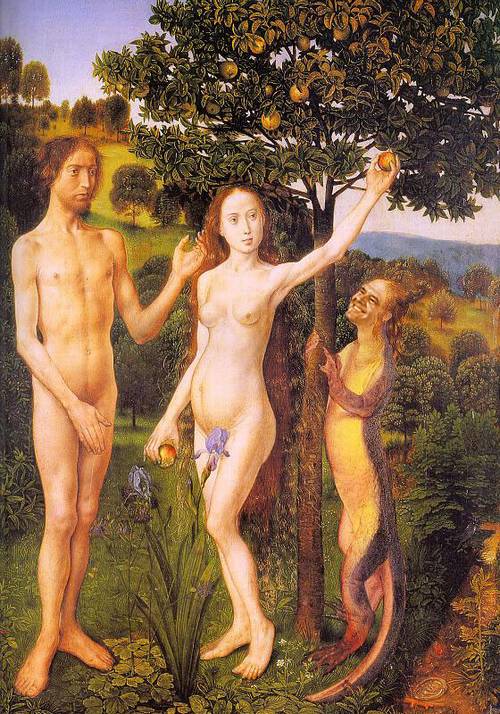
When we do go to heaven, I feel like taking away free will is going to be as if God were removing the burden of choice from our shoulders.  This however disturbs me, in that those who have not chosen God will be eternally damned.  That is a scary thought.  Lewis would like to believe that there is hope for those who choose to strive for a religion, or to learn more about the "why" of life, but there is no evidence for or against that desire.  In that sense I struggle to understand why we were given free will in the first place.  On that same train of thought, I would like to end with a question:  Did Adam and Eve have free will?  If they did, then their ability to go against God by eating from the tree in the center of the Garden makes sense.  Will there be a chance for failure in heaven?  (Another tree, if you will).  I certainly hope not, but am curious to see what things will be like.

Friday, January 21, 2011

A Colossal Network

Vocation is Calvin College's favorite word.  Yes, that is a bold statement.  But let us think about how coming to such a conclusion makes sense.  To start with, we have all of the beginning of the year quest orientation, in which you are ensured that you have time to, but need to choose your vocation.  Then students are moved on to Prelude in which they are taught a lot about integrating faith, school, and a liberal arts education.  All of which end up pointing to vocation.  Even now for another required course, all incoming students are reading a book in which it vividly explains vocation.  Let me be clear by taking a standpoint here, which is that I am not against calvin doing this.  In fact I would say all the talk of vocation actually is helpful to the average student, but that does not change my initial point.  Vocation is the word of Calvin.

When comparing the different ideas of vocation through each of the forms of education, I gather a sort of combined idea of what vocation needs to be in our lives.  So here goes:

From Quest I have learned that vocation is not definite.  God does not always say "This is what you will be doing for the rest of your life."  It is very rarely as simple as that.  When in a meeting with most of the sociology and social work professors, they went around the room explaining where they had all been before teaching at Calvin.  The variety of each one was immense!  There really was no framework for them to follow, each took a unique path.  If we choose to follow, God may not lead us down a direct path, but He will take us to where we should be.

From Prelude I have learned that vocation is something that needs faith and prayer.  Faith is sort of a given in vocation.  That is, our "destined position in the future" is based on our faith in God.  Faith is hard though, and sometimes prayers don't seem to be answered.  But praying is a necessity in this equation.  Learning to pray to God for guidance and advice is key.  God talks to us in the strangest of ways.  Prayers are often indirect communication, but sometimes are even a direct way that God will tell us where to go.

From Developing a Christian Mind I have learned that my vocation is something that needs to fit with other's.  Plantinga is a clear writer in that as images of God we have responsibilities (those being vocations), but that they should learn to coexist with those of other Christians.  We should not be easily broken standpoints that bend to the will of those around us, but with discernment at our sides, we should use each vocation as one small part of a gigantic web.  Let us stop thinking of vocations as career paths, and start to see them as organic journeys into a colossal network.

Thursday, January 20, 2011

Man or Rabbit?

The following is in part responding to C.S. Lewis' "Man or Rabbit?" If you are a random passerby, take a minute, and whether or not you read the short essay, feel free to comment, question, discuss, and/or debate.

This was one of C.S. Lewis' most blunt works that we have studied in this class.  Out of all of the pieces so far, this one was the most straight to the point, and if his words do not say it in themselves, the concise 5 1/2 pages shows it in a physical amount.  It surprises me that he combines being concise with such strong opinions, because Lewis' main method of argument has been to completely crush the opponent by exhausting all forms of attacks against his logic.  In this essay though, he makes a short statement as fact, solidifying certain parts of it to stone, and leaving other parts open, in order to make it infallible.

His attacks are very harsh (note that I actually call them attacks, because I believe he is attacking the character of those who he sees as condemned).  However, he is also quite interestingly placed in his logic, which makes me agree with him even more.  He is right in saying that those who do not look for a greater meaning in life are missing a large part of life, but I do not believe that he should condemn them, seemingly calling them useless individuals.  As if they are empty shells for avoiding one of the most important aspects of life.  Yes, they are missing the "big picture."  That does not mean that they miss all of the little ones.  They are still individuals that I have compassion for.

The one largest stumbling block in my faith is the seemingly contradictory love of God.  He created all of us individually and loves us all.  Yet even still he gives us free will, leaving it open for us to choose the way of evil, and be condemned to an eternity of suffering in hell.  One of my strongest issues with this is that I have a couple of friends who I honestly believe have eliminated the idea that Christianity has any ability to be true.  In each of their cases, it is based on different lead ups that helped them come to their conclusion.  Whether it was being raised in a strongly secular home that was avid in seeing Christianity as false, or something that they fought with while growing up and came to disbelieve through scientific research.  These people biblically are going to be condemned to an ETERNITY in hell.  That includes great people that have done a lot for others.  The extreme, and easiest example, is Ghandi, who biblically should be headed to hell.

C.S. Lewis mentions that he hopes God will have mercy on these sorts of people, as do I, but if there were to be one thing that really confused me as a Christian, it would be that.

Wednesday, January 19, 2011

Groups

The following is in part responding to C.S. Lewis' "The Inner Ring." If you are a random passerby, take a minute, and whether or not you read the short essay, feel free to comment, question, discuss, and/or debate.

We have all encountered different groups of people.  It is part of growing up.  As children, there is the difference between families; as high schoolers, there is the difference between band geeks, jocks, nerds, etc.; as adults, there is the difference between separate companies and social organizations.  In order to focus on the reading, the best thing to do will be to look at different types of groups.  The reason why I choose "group" as the word for defining each, is that I feel it is the most general term possible.  It is not meant to have any different connotations, and so its bland and vague denotation is what I will use in order to progress.

The first is a rejecting group.  It is an isolated "click."  This sort of group is a very bad sort which is not part of God's intention for community on earth.  In a rejecting group, there is the "in crowd" and the "outsiders."  This set up makes way for people who feel very comfortable while they are within the group, but then are less likely to branch out to others.  In addition, the outsiders feel a rejection (awkward, attacking, etc.) which leads the group to be a cut off from the rest of society.  This is a poor way to show community, yet it is disturbingly easy to sink into.

The second is an accepting, but hostile group.  Groups that are accepting allow people into them, but require, through social awkwardness or hostility that causes people to do wrong things they would not otherwise do.  A good example of this is a gang.  In a gang people are susceptible to peer pressure and generally do things that are illegal, or not worth doing.  In addition to this pressure, there is also situations in which leaving the group, especially in the case of a gang, can be a terrible process in which the leaver is the victim.

The third is an accepting group.  This group structure is exactly what God intended to have us all in from the beginning.  In this group type people can come and go freely, enjoying the company of others.  Accepting people for who they are and what they bring to the table.  It is extremely difficult to maintain a group such as this in a world filled with sin, but it is still the most proper style of group to be in.  In addition to being free, these groups have the lease possibility of hurt for the members within them that would otherwise be present in other group types.

I will end the different group types there, as I believe that those are the three groups most likely to be encountered throughout life.  As Christians, we should focus on the third style of group.  This can be hard to do, but it is well worth it when thinking of the benefits you are offering to others.

Tuesday, January 18, 2011

The following is in part responding to C.S. Lewis' chapter on Eros in The Four Loves. If you are a random passerby, take a minute, and whether or not you read the short essay, feel free to comment, question, discuss, and/or debate.

The English language is debilitating.  Although we have a complex alphabet, and tens of thousands of words (maybe even hundreds of thousands), and even still we are restricted to words that are already created.  This limits our vocabulary.  --On a short side note, why don't we just create a language where phonetic sounds mean specific things, that way one can actually piece words that haven't been created together?--  Anyways, in reference to Lewis' piece, the English word that I would like to have a squabble with is "love."  This word has so many meanings, from enjoying the look of a picture, to what a baby feels for those who care for it to the actual act of making the baby itself!  That miserable failure of language encourages people to turn to other languages in order to differentiate.

Often, that other language is Greek.  When looking at the four different words for love in Greek, one will still find issues of them not being specific enough.
The first is storge- which can be defined as a simple affection for something, or something that is forced, for instance, loving a tyrant.
The second is philia- which can be defined as a friendly love, something between two people that share a mutual affection for one another in a simple way.
The third is eros- which can be defined as sensual love, or the love significant others share.  This one however is especially debated, and as per the reading I will expound on, as it needs a more in depth description.
The fourth is agape- which can be described as the strongest sense of love people can share, or a love that is sacrificial in nature.

Even in the Greek language, which has, in this case, a four times more complex vocabulary, fails to completely separate each feeling.  Within eros, there are two different types of affection.  There is that of "love" (which can be seen as the word meaning strong feelings for a significant other), and "sensual" (which can be seen as the word meaning erotic feelings towards another).  Lewis points out this flaw himself by explaining the issue between them choosing eros for love, and venus for sensual, this is breaking of language barriers precisely as I would like to have done.  Eros is then redefined as the love between two people who would prefer nothing more than to share the world together, and venus is redefined as the erotic attraction to sex.

All I can say on this matter, is that Lewis' logic impressively prevails again.  Making more defined versions of the most amazing emotional complex is alluring.
The following is in part responding to Chapter 4 of Cornelius Plantinga Jr.'s Engaging God's World. If you are a random passerby, stop for a minute. Feel free to comment, question, discuss, and/or debate.

16 For God so loved the world that he gave his one and only Son, that whoever believes in him shall not perish but have eternal life. 17 For God did not send his Son into the world to condemn the world, but to save the world through him.

The story of redemption is a picture perfect one.  There are the broken people that choose the wrong actions, and there are the broken people who choose to follow a savior.  When the savior leads those who follow him to redemption, they are saved.  This story is simple.  There are no plot twists, nor open ended endings; there are no hidden characters, nor secret agendas; it is just straight forward.  Because this is such a simple story, however, it can be problematic to understand.  Why would an all powerful God commit to such a thing?

God could have defeated sin in any way he saw fit.  As an all powerful God, I expect evil is something that could hardly even affect him.  He did not need to come down from heaven and take up human flesh.  He did not need to give the world a savior on the ground.  This is where some parts of the story of redemption just does not make logical sense to me.  My brain is but infinitesimal to God's omnipotent knowledge, but it does not stop me from questioning his methods.  

Why did God promise a son to early generations when he likely could have just abolished parts of sin himself.  Why didn't God send a prophet that said "hey everyone, we don't need to sacrifice animals anymore, God has decided to let us now more easily ask forgiveness."  I was talking with my friend, and it is these sort of questions that become increasingly difficult to answer, because while on earth, we won't know.  While that all may be frustrating, it does not change my gladness that God did send someone to redeem us.  Whether a person sends me a chocolate in the mail, or hands it to me in person, I will still be glad for the gift.  God's amazing grace was not handing us chocolates though, it was handing us feasible access to eternal life.  What an insane concept!  

One of the things I will be most happy for in heaven, is when all these earth-dwelling questions get answered.  That will be one of the most interesting walks with God I am sure, and yet still it will only be the beginning.  (That is, if there even is a beginning to infinity).

Monday, January 17, 2011

The following is in part responding to C.S. Lewis' "Learning in War Time." If you are a random passerby, take a minute, and whether or not you read the short essay, feel free to comment, question, discuss, and/or debate.

In relation to this piece, I will talk about vocation.  One thing that we have been talking about frequently in class is that the position of the person is not that makes them more or less Christian, or what they choose to do with their lives.  The most important part is that they are looking for ways to put God into the world around them.  We are not all called to be priests, and although they may have more of an obvious position to spread the word, we all have opportunities.

A business man can ask his less popular neighbor cubicle how he is doing; a cinematic producer can require respectfulness between actors on the set; a student can look for the fellows who need help with classwork.  All of these are opportunities to share the love of Christ.  In every situation we can choose to make healthy Christian choices, and while realistically most of those choices will be hard ones, it is what we are called to do. One hymn that is really a defining position of my Christian evangelism is "They'll know we are Christians by our love." It sings:

We are one in the Spirit, we are one in the Lord 
And we pray that all unity may one day be restored 
And they'll know we are Christians by our love, by our love 
They will know we are Christians by our love


There are two powerful messages to see here.  The first is that we are united by God.  Christians are not alone.  Not only do we have the eternal God to back us up, but also one another.  The second is that often times beating people with the bible really will not help others to believe in the Christian faith.  One of the best things any person with any vocation can do, is simply show love to all of those around them.  

In so many sermons we have been told the same message: "show love to others, and they will notice that there is something different about you and naturally ask questions."  While this may sometimes be the case, there is more to it than that.  God's creation is a precious thing, and we should treat all of it with love and care.  Even this computer on my lap right now can be something to thank God for and see amazing beauty in.  Living the Christian lifestyle of loving is not only something for others to witness, and so be used evangelistically, but also simply a way to thank God for what he has given us.

If you've got four minutes, then sit back and listen to Arabesque No.1, and enjoy part of God's creation.

http://www.youtube.com/watch?v=4UMAEYbQnjE

Responsible Stewards

The following is in part responding to Bob Marshall's "The Wonder of Learning."  If you are a random passerby, take a minute, and whether or not you read the short essay, feel free to comment, question, discuss, and/or debate.
Learning: It can happen any time, any place, any age.

I have a friend that surprised me some time ago when we were out at a store.  She had picked up a purse she liked the look of, and after checking the tags, gave a disgruntled face and lost interest in it.  My immediate assumption was that it was too expensive, so I took a look, and found out it was quite reasonably priced.  Puzzled, I asked her what she suddenly disliked about it, and she responded "I just don't support going green.  When God wants the world to end, it will."

Why do we create things?  Is it to lengthen our lives on earth by giving us more years to live?  Is it to speed up the time we have by giving multiple levels of constant entertainment?  Here was someone that believed in global warming, but also believed that it was/is God's plan to have it.  Telling someone that they are wrong is assuming that I know God's plan, so there is no way that I can say things for sure, but I feel that we are called to be stewards of God's land.

One of the most ingenious parts of humans that God created was the ability to create things.  He is the Creator, and this is one way that he made us in his image.  Based on the reading, I would deduce that Marshall would also believe the same statement. "We have to make real decisions about how we can put flesh on what God has shown us to be the path of peace, hope, steward- ship, and justice. God. gives us real responsibility. Adam named the animals, and God accepted the names that Adam gave."  We are responsible for things on earth.  Why God gave us this responsibility to a race filled with sin is beyond me, but the fact is that we have it.

Power over other things God has created on earth is a gift and an opportunity.  Learning to make wise and conscious decisions about what we are doing, and how those decisions will affect the world God has given us is our responsibility as stewards.  Like the servants who are given money by the master, God wills us to multiply the gifts he has given us, not let them sit idle and gain nothing.

Sunday, January 16, 2011

Corruption

The following is in part responding to Chapter 3 of Cornelius Plantinga Jr.'s Engaging God's World. If you are a random passerby, stop for a minute. Feel free to comment, question, discuss, and/or debate.

Falling is a terrible sensation.  I wonder if our bodies haven't even been hardwired to know that for the irony of it.  It is our reality that we have fallen from what God intended for us to be.  While God wills our reality to be wholly good, it is tainted by evil.  Word choice is very important here, as we will also see from Plantinga's writing.  Tainted is used specifically for its definition, which is to contaminate or pollute something.  This is when something that is neutral, or good, and make it bad.  Evil twists in order to twist.  There is no method to madness, for it is simply the corruption of order and structure.

Purity is a powerful word that is impossible.  As sinful creatures, no matter the aspect of our life, there is no opportunity to be completely clean of it.  It can be passed down through generations even in the form of prejudices and abuse.  "Human character forms culture, but culture also forms human character."(Plantinga 57)  This Dangerous concept leads way for evil to manifest in different societies as deceiving sins.  Our consumer culture is one perfect example of this.  When capitalism came into existence, it was widely accepted.  What it does is let a third party create more stable and speedy ways of buying and selling products.  The issue became the corruption of something that otherwise could have been good.  

Because there are few restrictions on how a third party, or middle man, does its business, they are able to manipulate and gain more than they should from interactions.  Look at Nike, a popular shoe brand for instance.  Everyone by now is likely familiar with their issues with worker rights and poor overseas treatment.  What they do, is spend hardly anything on workers who have no other choice but to work for them, and then sell the products to people who are willing to pay for far more than they are worth.  This circle is an unfortunate example of evil's hold on a simple modern day commodity.

While there is nothing bad about shoes, as they are a useful tool, and there is nothing bad about companies producing them, there is pollution of good in the buying and selling of them.  This is something Christians have to come to terms to.  Evil is present, and although purity is impossible to achieve in this broken world, we must still turn to God in an attempts to get as close to it as we can.

The Origination of Good

The following is in part responding to C.S. Lewis' "The Poison of Subjectivism." If you are a random passerby, take a minute, and whether or not you read the short essay, feel free to comment, question, discuss, and/or debate.


In this piece, Lewis continues in the same vein as Mere Christianity, which makes it difficult to remark on.  Instead of making quite a similar post to that of last weeks, I will speak about something that was of particular interest and came up in class discussions over "The Poison of Subjectivism."  That is the topic of God and good.  So to begin with, let us look at John 1:1-5:


1 In the beginning was the Word, and the Word was with God, and the Word was God. 2 He was with God in the beginning. 3 Through him all things were made; without him nothing was made that has been made. 4 In him was life, and that life was the light of all mankind. The light shines in the darkness, and the darkness has not overcome it.


This verse is not simple. It appears to be so, because it is so basic in rhetorical structures and wording, but the picture behind it is not. Speaking things into existence is something we have hardly figured out in a physical sense. We do speak thoughts into existence, and even can use words to help speak the power of God in some circumstances. But what will bring me to the topic of God and good is looking at these verses with a different twist.

"But it might be permissible to lay down two negations: that God neither obeys nor creates the moral law. The good is uncreated; it never could have been otherwise; it has in it no shadow of contingency; it lies, as Plato said, on the other side of existence."  What Lewis talks about is the idea that good could be something that is not created, but simply is.  When looking over John 1, I thought about the possibility of either the word directly be referring to "good" or if good was in the same boat as the word.  Lewis also talks about how it's difficult for us to understand things like God as three in one, and maybe good is just another concept that's perplexing.

If the word refers to Jesus, this even further helps my belief in the word referring to good.  If Jesus simply is "good" his ultimate power over the Enemy makes complete sense.  The origin of good, then, becomes clear.  It was and is and is to come, eternally existent.

So to finish this off with a mathematical question:
The Word=Jesus, Jesus=Good, The Word=Good?

Friday, January 14, 2011

Agreement, and Moral Law

The following is in part responding to an excerpt from C.S. Lewis's Mere Christianity. If you are a random passerby, stop for a minute. Feel free to comment, question, discuss, and/or debate.

One thing that I would like to remark on, is that without even looking at everyone's separate posts, I am positive that nearly all of them (or indeed each one) is affirmative of Lewis in this writing.  What is the correct reaction to this?  Should we belittle others posts for simply agreeing with Lewis?  Should we be upset that we or they feel no controversy towards the subject?  It is feasible to follow any of these routes, and feel as if it is the correct one.  I would not be so fool hearty to accuse everyone of those or other less useful thinking patterns; I only mean to bring up the likelihood of this sort of circumstance to increase awareness.  It was my first instinct to feel upset that I could not find any controversy within Lewis' material to blog about, but after thinking about it for some time, I realized how foolish this was.  The strength of Lewis' argument is something I believe we should all find comforting, and for those of you who already do, I am glad that you have already come to that conclusion.  It is influential and solidifying thinkers like Lewis that really should be an aid to our faith, because in a world that is covered in misunderstanding and uncertainty, God speaks through influential people to spread illumination.  

Because this reading was so long, and I would have to skim over parts in attempts to cover the whole thing, I will instead focus on the chapter that was most interesting to me.  C.S. Lewis' goal here is to slowly work into the argument.  He does not mean to burst all of his ideas at once, but instead takes a slow approach in order to "lure" them in, if you will, in order to have them look at things with a more open mind.  Chapter three was a proof of a moral law.  Lewis utilizes basic english techniques beginning with concrete examples.  The Law of Gravity, for instance, causes rocks to fall.  There is no evidence of the law being a question, because the rock seemingly always falls, so it is more because the rock is in the air, and there is a law of gravity, it falls.  You can not really blame the rock for being the wrong shape either, for its shape is a constant.  Lewis then turns to humans attempting to view a "Moral Law."  To choose a vibrant example, when we see another human drowning, our desire is to help them out.   The secondary desire is to conserve our own life, and avoid going to help them.  What should a man do in this situation?  Morally, it is well agreed upon that he should help the individual in the water.  Where does this morality come from though?  It comes from The Moral Law, which Lewis would go on to explain origins in a greater power.

The basic point that I am attempting to make, is that I agree with Lewis.  His thoughts on The Moral Law are very insightful, and the best I can do is simply agree.  However, agreeing is not a bad thing to do here; agreeing is, in a case in which there is no reason to disagree, more productive.  If you do not agree with something, then by all means, you should explain those points, but if you do, there is no logic in finding miniature faults to work against.


Wednesday, January 12, 2011

Divide and Conquer

The following is in part responding to an excerpt from C.S. Lewis's The Screwtape Letters. If you are a random passerby, stop for a minute. Feel free to comment, question, discuss, and/or debate.

One thing I've been thinking about since reading through the slide show is one particular question:

Are the simple choices we make on a daily basis really trivial and revocable? Can you give some examples of an apparently simple choice that ended up causing major life changing consequences?

I couldn't answer that question when reading through it for the first time, nor when we had a class discussion on it the next day.  The idea of a simple choice doing so much for a while really just didn't make sense to me.  I am still not sure I can think of anything that really has major life changing consequences, but large consequences I can definitely see.  Even just tonight I was confronted by a couple of friends that were upset that I hadn't mad time for them over Christmas break.  Through a couple of simple choices I had made, it left no time for those friends, and I didn't think too much on the matter.  That was a seriously poor choice, and has to do with one of the most important things I think we can learn from The Screwtape Letters.  

I almost lost those friends just from a series of simple choices that really emotionally hurt them.  I really want to stress this word because in the same way that deceiving and miniature temptations are better at leading us to a sinful life, choices that may seem simple can be far more than what they appear at first glance.  Acknowledging the importance of good will in every minute will help us to make wise choices.  Thinking about every decision you make before you make it will allow less room for deception and evil to creep into our lives.  

I really can't say this enough after the experience I just had, and I took my time thinking about whether or not this was actually worth blogging.  As an avid debater, emotion is something that should not dictate a majority of your argument, and I was worried that it would happen here.  After staring at the computer screen thinking things over, it couldn't feel like a more clear point.  It is so simple to ask God for guidance on difficult decisions, and life changing ones too, and to pass of simple decisions as something we don't need to worry about and can handle on our own.  This is exactly what the Enemy wants.  To Divide and Conquer.  

Tuesday, January 11, 2011

The Burden of Something Grand

The following is in part responding to C.S. Lewis' The Weight of Glory.  If you are a random passerby, take a minute, read the short essay.  Feel free to comment, question, discuss, and/or debate.

I have been a musical performer and competitor for most of my life.  When I started I was an innocent eight year old, learning to play percussion.  Over years I've gone in and out of bands but there is a set of burdens that come from being a section leader that I would like to share with you.

Finding out that you are going to be the section leader for your instrument is exciting.  Mainly, there is popularity and authority to gain, and to many people, those a very desirable payoffs.  Compelling your section to get better through practice, focus while playing, get along with each other, etc. can be a taxing process, but that comes under the responsibility to use the popularity and authority you've gained in a productive and positive way.  There are many things to do to affect/change the musicians of your section.  Trying to stay virtuous, responsible, and humble when in such a position is hard.  It is easy to slip into error in any of these categories, because with the burden of being a section leader, there is a natural desire to search for recognition.  The recognition we earn from taking the burden we should be happy with.  Searching after more recognition becomes sinful and even from an atheistic perspective, is being simply proud.

The reason why I bring up this example, is because it is no different than the spiritual burden of glory that we have all been given by God.  Each one of you, the readers, have faced the same burdens in a far more significant form.  When doing works of good for God, we are fulfilling his desire for us to be stewards of his creation.  This task is not an easy one; it is not one for the fickle; it is not one for the haughty; yet it is one that God trusts us with.  It is our duty as Christians to take up the full weight of glory and do so with humble hearts, with righteous goals, and with iron zeal.  For in the same way that we are the sheep of God's flock, we should be virtuous shepherds guiding one another towards the pure blue sky.

The Creator

The following is in part responding to Chapter 2 of Cornelius Plantinga Jr.'s Engaging God's World. If you are a random passerby, stop for a minute. Feel free to comment, question, discuss, and/or debate.

"Infinite" is difficult to understand for beings that live in time, but it is most often pictured as a figure eight on it's side, in order to show a perpetual motion.  One thing Plantinga is clear on, is that God is infinite.  If you have not yet come to that conclusion, then read any of: 1 Kings 8:22-27; Jeremiah 23:24; Psalm 102:25-27; Revelation 22:13.  All of his creations, however, are subject to a timeline of his choosing and that includes this earthly world.  We need to recognize this, because we are God's creation.


Which leads to another point that Plantinga makes, which is that we are not a random genetic mutation, that is to say, we are purposefully the way we are.  This is not, however, an anti evolutionary statement.  God could have created humans in any number of ways, be it through initially placing us on this planet as we are, or forming us from a small bit of bacteria at the beginning of time.  The way that God created us is unimportant, it is just that God created us that is.  God has a purpose for each one of us, and that's what conflicts with the idea of considering humans as a random chance.  We are created in God's image in order to serve him.  "We image God in our personhood, communion, responsibility, dignity, virtue, suffering, and freedom" (Engaging God's World 41).  All of these traits are God given and what should be used in order to fulfill his plans for us.  

Personhood- We are each individuals and can make decisions for ourselves.
Communion- Possibly one of the most important similarities, God is a trinity, and so is always in communion, but we here on earth are given the blessing to be able to commune with all people and God's creation, and it is extremely helpful spiritually and emotionally to do so.  
Responsibility- We have God given responsibilities: tending to the land God has given us, and spreading the knowledge of the gift that God offers, eternal life.
Dignity- We need to be respectful of ourselves and others.  
Virtue- We have the ability to strive for moral excellence.  
Suffering- We are able to feel the pain of ourselves and others.  Suffering allows us to really utilize the other images of God we are given.
Freedom- Free will is a big deal in the christian faith, and this is what makes following all of God's images to out fullest extent so important.  When we follow them all, we are using free will to it's best extent.  


As Christians, we know that God made our world, and us.  I would wonder though, if he is a creator, how many other things he has created.  I feel it would be a pompous assumption to believe that we are God's only creation, and that only makes me more excited for the afterlife.  What if there's universe where our physics is a paradox?  What if that universe's physics is a paradox to ours?  Things to ponder. 

Monday, January 10, 2011

The following is in part responding to C.S. Lewis' Our English Syllabus.  If you are a random passerby, stop for a minute, read the short essay, and feel free to comment, question, discuss, and/or debate.

"Education is essentially for freemen, and vocational training for slaves."

When I think about this quote, things make sense.  Many people become educated in order to get a job, which then leads to them being able to spend some of their time relaxing.  It is a logical part of our society. We are a powerhouse looking to achieve greater goals every generation, specializing more and more in specific things in order to advance as far and as fast as possible.  Because specialization can be so specific, that lets the eye doctor avoid picking potatoes out of the ground for food, and can leave that to the farmer; it lets the farmer avoid selling his potatoes, and can leave that to the business man.  Between that capitalistic system, and technological advancements, people can work on something specific that they have been educated for, and relax in the downtime.


When looking at vocational training, however, Christians are taught that there is constant spiritual warfare.  Constant spiritual warfare means perpetual work.  The backing behind this is plain and simple: to Christians, this physical world is only a temporary place in which they guide both themselves and others to an afterlife in heaven.  Some may consider this the "big picture" of life.  I would see then, the education as part of our life that we learn in order to earn temporary relief.  Work from education is simply a method of sustaining society, while earning time to psychologically relax.  When does a vocational worker's work run out?

That would be when either the entire world is Christian, or they pass on from this world.  It has become my opinion, that when a vocational worker's work ends, they will be able to relax.  When passing to the afterlife through the Christian belief, things become "out of our hands."  In a sense, letting the work be passed down to those still alive on earth allows those who have passed on the relax.  I believe then this ties in with the desire for God, the only thing that can complete us from my last post.  While the world may have ways to allow us to temporarily find relief, only through God can we find eternal tranquility.

Three Tiers of Desire

The following is a blog post in part responding to C.S. Lewis' We have no Right to Happiness.  If you are a random passerby, stop for a minute, read the short essay, and feel free to comment, question, discuss, and/or debate.

Hope and longing are similar words, but have distinctive emotions backing them.  While you may hope for a specific present you'd wanted for holiday or no rain on a day you'd like to have a picnic, you would not long for those things.  Longing is stronger than hope; you would long for a victory in some feat you'd been struggling with for a long time, or for a spouse to love.  This distinction in levels between hope and longing is important when looking at the greater scheme of life.

Fulfillment in life is something that humans seek to achieve.  We look for things to fill dissatisfaction in our lives by saving for a new car, or indulging in some sort of sexual pleasure.  However even once each of these and/or any other worldly tasks are achieved, they only occasionally grant satisfaction and never for an indefinite amount of time.  Life, for humans, has become a basic game of a child's toy:
This basic child's toy, often called "shapes", is where we learn to fill the gap with the correct shape.  The gaps get perfectly filled until the pieces are removed.  Unlike this toy, our life is not perfect.  Things can never be perfected, nothing can ever be fully satisfied by our world.  It is as if all of the pieces are not the same shapes as all of the gaps.  We will look for pieces everywhere to fulfill our desires, but in the end there is only one masterpiece that can fill every need we could ever have.  C.S. Lewis references the German word sehnsucht which is "a word with strong overtones of seeking and searching."  We are seeking and searching for the one thing that can fill all those gaps, and that one thing is God.

Hope, longing, and sehnsucht form three tiers of desire we have as individuals.  We hope for things that are not necessary; we long for things that we feel are necessary; we sehnsucht for the one thing that can fill all.  In the end life fulfillment comes from sehnsucht alone, but the others are temporary fixes.

When trying to fulfill our life with anything but God, we will find that it's much like playing a famous game, but with a minor twist:

http://www.playtetrisgames.org/hell.html

Sunday, January 9, 2011

Rights to Happiness


Happiness is something that can be seen in many contexts.  When people think about long term happiness though, there is a general understanding that it correlates to lifelong partners, or marital spouses.  However, with our legal system, they are not necessarily lifelong because there are many times when divorce comes into existence.  "Have a Right to Happiness" is a strongly opinionated argument in which C.S. Lewis attempts to label divorce as something solely based on sexual impulses.  

After explaining a situation in which Mr. A and Mrs. B were not satisfied with their original marital partners, and so divorced them in order to get together with one another.  C.S. Lewis describes their story differently than he explains it, which is where the first issue arises within this piece.  In the description he mentions a few reasons for each divorce which all seem to hold some merit.  "Mrs. B had adored her husband at the outset.  But then he got smashed up in war.  It was thought he had lost his virility and it was known that he had lost his job."  Upon explaining their relationship after the story though, he states that their only reason for divorce, through a character named claire, is of a sexual nature.   

Is their divorce truly something that can be labelled so boldly though?  Although I don't believe that this was divorce was the sole point C.S. Lewis was attempting to make, I can't help but be critical on each part of his essay, this being one of them.  Because his example is flawed from description to explanation, the rest of his essay is built on weak grounds.  

While the essay does not prove its point through logic, it still has the correct morals.  Sex in Lewis' culture may have started to become more abundant and less meaningful, but over the course of the past sixty years or so, it has gotten exponentially worse.  Because individualism is so high, there are many opportunities for people to elope for a while and make decisions based on hormones.  In addition to that, the media has also become accustomed to using sex as a means to sell products.  And if it that doesn't say enough, playboy was founded in 1953 and pictures our decline into selling sex for pleasure and forgetting it's emotional connections.

Happiness can be derived from any number of things.  Do we deserve to be happy? That is a question I will leave to fruitless debates of theologians and philosophers.  But what I do know is that sexual happiness isn't something that should define whether a marriage stays together or splits apart.

Happiness can be found in the strangest of places...


Thursday, January 6, 2011

Useful Bulverism?


Bulverism is the refuting of a point based on preconceived observations.  C.S. Lewis describes it thoroughly in an essay in order to try to enlighten people of the gain of arguments.  Because of argument's poor connotation, a definition will be a useful tool in clarity.  An argument is not necessarily a series of brutish attacks between warring fanatics, but is just a general term for a dispute between separate parties.  Bulverism then is a way of arguing that is generally considered not constructive but occurs often.

This happens frequently before a thought is even completed.  Based on some preconception A will decide that B is already wrong.  A does not like the way B wears hats, so when B begins to talk about how it wears gloves, A immediately discounts B as a poor source for that information.  The preconception A has allows neither learning nor B could have had the secret to wearing gloves in the perfect way, but B also can have more information that A already knew, or information that A, given proper debate procedure, could prove faulty.  There is a chance both ways, and A is cutting out both the opportunity for learning or time wasting.

Is the chance of B having useful information 50/50?  There are specific incidents where I feel that the bulveristic thought process may be useful. I would argue that in many cases, odds can be educationally guessed before the interaction is held.  If the initial judgement of whether the opponent will be right or wrong is bulveristic, then stereotypes are a large part of that.  A stereotype, or "pre-judgement" can actually be a useful way of limiting time loss.  Stereotypes can give statistically likely background knowledge of a person from simple initial contact.  If someone were to claim to a scientific orginization that they had the method to individual human flight, there can already be educated guesses as to how likely they are to actually holding that knowledge.  As a very rough break down, I will simply estimate the likelihood of several different types of people's chances of knowing that long sought after flight (these are rough estimates used for example purposes only):

A Doctor of Engineering- 85% chance
A College Engineering Student- 10% chance
A College English Student- 4% chance
A High School Student- 3% chance
A 4th Grade Student- <1% chance
A Biologist- ??% chance

Even though this is a fictitious diagram, it serves it's purpose.  If a Doctor of Engineering were to make such a bold claim, they would be far more likely to be able to back it up for a multiple reasons: they have gone through many years of schooling in that project's subject, their reputation could be hindered if incorrect, they likely have a more logical mindset of how to deal with the project, etc.  However, they could also be joking around or simply be wrong.  You'll notice though that the high school student for instance has a far lower percentage chance, this is because at his level of education, maturity, average resources, etc. he is far less likely to be able to back up that claim.  It is worth mentioning that there is still a chance though, and for that an avid listener may find a gem.  Although from a logical perspective, the listener must decide whether or not that time is worth giving to each presentation.

This "pre-judgement" is something that people use every time they write a research paper, and society even encourages it.  When getting sources for a research paper, the person will look for relevant articles that are likely to hold valuable information.  If one article is written by "Jimbo" then they are less likely to even read it and immediately mark it as useless to move on.  If another article is written by "Dr. Franklin" they are more likely to see what it has to say while looking for useful research.  This is basic bulverism, even in deciding that one article is not worth your time over another, but it is statistically logical in order to save time.

In short, although bulverism is often a chain that slows intellectual growth through allowing ignorance and stagnant unresolved issues, it can be used as a tool to skip over sources that are unlikely to be useful, in order to save time for other things that are statistically more useful.

Looking At and Along


In "Meditation in a Toolshed" C.S. Lewis writes about different ways of viewing the world around us.  He uses the metaphor of a dusty old toolshed with a hole in the roof to convey his message most strongly.  Inside of the toolshed there is a stream of light coming through one of the cracks in the roof.  When looking at the stream of light from across the shed, there is a distinctly different picture than when looking along the light through the crack in the roof towards the sun.  Lewis states that each perspective, while one is sometimes superior to the other, should be used in all observations.

The only culture I can claim to understand is that of the United States, because I have been through the socialization process here, like so many other Americans have.  In our culture, taking a "step back" to see the "whole picture" is very important.  We study why interactions happen between two people or things.  These studies go by many names: sociology, biology, chemistry, business, psychology, etc.  Taking third person perspectives to a situation is our forte.  This is the looking "at" perspective.  Similar to when Lewis was looking at the beam of light from across the shed, often times we simply look at, and not along.  

The Scream, Edvard Munch
In fact, we are so concerned with taking a few steps back, that we are encouraged not to look "along" a whatnot until it has thoroughly been looked "at."  While being useful in discerning intentions of something, as long as the whatnot will not harm yourself or others, looking along is the other piece of the puzzle.  For example, studying a piece of art.  When we observe a piece such as "The Scream" (pictured above) we have two separate ways to observe it.  There is the initial looking at, where we notice focal points and different color themes, but there is also a deeper layer of observation.  In order to look along a painting, we study the artist and attempt to discover his mindset, even by attempting to recreate his piece.  When using this looking along observational technique we can begin to look at the painting from the other side of the canvas.  Attempting to look through the artist's perspective as he painted this will give us a new and more full understanding of the painting.

Of course, there are exceptions, which I hinted at earlier.  Things that will be harmful to yourself or others when looking "along" are not appropriate to do.  For instance one may look at a person stealing something, observing it from a distance.  Observing that incident through the thieve's shoes by actually stealing something yourself is morally wrong, and should not be done, so in that sort of instance looking along is inappropriate.  However, using specific situations like that in order to devalue the priceless ability observe "along" is also wrong, and should not be credited.  Looking along is a valuable part of our impressively designed minds, looking along is like adding color to a black and white picture.