Monday, January 24, 2011

Vocation

Ben Podnar 
24 January 2011
Professors Ribeiro and Ribeiro
Developing a Christian Mind C.S. Lewis

Vocation

Disclaimer: This essay will be an expansion on a point I have previously made about vocation. Looking back on all of the topics we have covered in this class, I feel that it is the most applicable, and that I will learn the most from putting things together in order to learn more about it. Some of the work will be copied from the original post if I feel that it is up to the standard of this essay, other parts of it will be rewritten, and others thrown out. Attempting to integrate every piece of information that has been read over the course of interim to an essay about vocation would be cluttering, so instead only relevant topics will be used.

As Christians we love the idea of “vocation.” This puts the name to what we are all searching for: a way that we can productively work with our abilities to help God with his plan here on earth. This is our meaning in life. A message I heard at Mars Hill in Michigan recently, was that all of life is going to be washed away when God comes back, all creation, all everything; all that will be left, is us. How true can that point be? Where do we find any use in anything after a message like that? I would like to debate with the pastor on this issue, that the way he presented things left no room for a useful vocation. God wills to use us in our lives for the purpose of converting others to his name. When we see a piece of artwork as something that is neat for one moment, but that will inevitably be destroyed, we are seeing this in the wrong light. That piece, will be one miniscule part of the way another person formulates how they think about the world. What we do in this world is not done for an immediate visual, but instead for the effect it has on people. People are the things that will be left in the end. When God comes to wash away everything, we will still be here. Vocation is finding a place in this world through which God can use you to affect other people; we can learn about it through C.S. Lewis' essays, Calvin College's programs, and Plantinga's writings.

God wants us all to do our part in creation. He has specific plans for everyone, and that leads to us playing roles in his kingdom. The way that we approach those roles will strongly be affected by how we understand things around us. Do we look at or along them? C.S. Lewis in “Meditation in a Toolshed” describes the ideas of at and along. Looking at something is like looking at a Native American doing a rain dance, and seeing it from the critical perspective of how little it may actually affect the weather around him. Looking along something is like looking through the standpoint of that Native American, feeling as if there is a complete power that is coursing through, in order to bring rain the next year.

In order to find what our vocations are, we need to be willing to look both at and along things. Because, as C.S. Lewis mentions, we can never completely remove ourselves from the equation, we have to make sure to look at if from all possible perspectives within it. What this will give is the clarity of any issue, by making sure that you are feeling each perspective, you are gaining a clear pathway for what your decision should be. God's guidance is not always clear or easy to follow. Generally it is quite surreptitious, but still we have to try to find it in whatever ways we can. Making sure we are looking for our vocations, but not completely devoting ourselves to it is important, because it could in turn become a vice. A vocation is an opportunity that comes to you, and by preparing yourself through opening your mindset and being prepared for it, you can hop right on the train riding on tracks forged in the direction they are meant to be.

Vocation is Calvin College's favorite word. Yes, that is a bold statement, but let us think about how coming to such a conclusion makes sense. To start with, we have all of the beginning of the year quest orientation, in which you are ensured that you have time to, but need to choose your vocation. Then students are moved on to Prelude in which they are taught a lot about integrating faith, school, and a liberal arts education. All of which end up pointing to vocation. I would say all the talk of vocation actually is helpful to the average student, but that does not change my initial point. Vocation is the word of Calvin.

From Quest I have learned that vocation is not definite. God does not always say "This is what you will be doing for the rest of your life." It is very rarely as simple as that. When in a meeting with most of the sociology and social work professors, they went around the room explaining where they had all been before teaching at Calvin. The variety of each one was immense. There really was no framework for them to follow, each took a unique path. If we choose to follow, God may not lead us down a direct path, but He will take us to where we should be.

From Prelude I have learned that vocation is something that needs faith and prayer. Faith is sort of a given in vocation. That is, our "destined position in the future" is based on our faith in God. Faith is hard though, and sometimes prayers don't seem to be answered. But praying is a necessity in this equation. Learning to pray to God for guidance and advice is key. Prayers are often indirect communication, but sometimes are even a direct way that God will talk to us, telling us where to go.

In the concluding parts of Developing a Christian Mind, we heard Prof. L. Smit closing off the last introductory course to Calvin. To focus on one specific point, she talked about how to gauge our work. Using the following graph, there are two possible options for the wrong ways of using or not using the gifts God gave you. Option A2 is to not challenge yourself enough based on your skill level; option A3 is to challenge yourself too hard for your skill level. 

In order to do things the way God intended, we have to work to our potential. That does not include pushing ourselves to anxiety, or letting ourselves slip into boredom, but rather finding a spot in the “Flow Channel” in which we are challenged to our skill's potential.

Plantinga in “Engaging God's World” clearly writes that as images of God we have responsibilities (those being vocations), but that they should learn to coexist with those of other Christians. We should not be easily broken standpoints that bend to the will of those around us, but with discernment at our sides, we should use each vocation as one small part of a gigantic web. This means two things.

Firstly, we have to find our own kingdom. This is another way of talking about our vocation. Our kingdom is what we have been given stewardship over. God gives us each responsibilities in order to better serve his kingdom. These responsibilities can change over time, and we have to be prepared for them to, but not weaken our grasp on what is currently our responsibility. We have to find the balance between maintaining control of what we already have, while being ready to move on to further new roles we may be given.

Secondly, we have to find how our kingdom connects to those around us. It can be very easy to become a tyrant of any situation. Those who are used to power often seek it. Christians must defend themselves from these habits. A man who assumes power of his own accord is taking something that is not necessarily his. This can be destructive to others. Like in the renaissance when there were Kings, Lords, Vassals, and Peasants, there are also different levels of kingdom and many of the same level. If one Lord were to assume control over more than his share of vassals, then there very likely would be an outbreak of war, and this is clearly not the shalom that Christians strive for. Learning to incorporate discernment into how we interact with other kingdoms is essential for God's kingdom to work properly.

In conclusion, while it may be an arduous journey to find our vocations, and then to uphold them, and even still to maintain them in harmony with those around us, it is what we are called to do. We are servants of God, and with that comes responsibilities of work here on earth. No vocation is more important than the one next to it, nor any less subject to change. God may send us different directions in life, we just have to be prepared to go where he sends us, and do work happily with the knowledge that there is a destination in all of it. It is time to stop thinking of vocations as career paths, and start to see them as organic journeys into a colossal network created by God.


Works Cited

Csikszentmihalyi Mihaly, Flow: The Psychology of Optimal Experience (NY: Harper & Row 1990)

Lewis, C.S. Meditation in a Toolshed. N.p.: n.p., n.d. Web. 15 Jan. 2011. <http://www.calvin.edu/~pribeiro/DCM-Lewis-2009/Lewis/meditation-in-a-toolshed.pdf>.

Plantinga, Cornelius. Engaging God's World. Grand Rapids: WM. B. Eerdmans Publishing Co., 2002. Print.

Sunday, January 23, 2011

One Final Question

Lewis creates some very interesting points in this piece, that really add to some clarity, and to some consistency with things I have been confused about in my faith.  The idea that God cannot create or do "nonsense" is intriguing.  I have never thought of it that way.  Can God make a rock so heavy he can't lift it?  This is a worthless and circular question that really does not mean anything in the end.  It is not God's ability one way or another for that question, it is merely useless to talk about, because it is a nonsense question.  Then when adding in that given free will, there must be pain begins to make more sense.  As if free will without pain would be yet another nonsense question.

This makes me wonder then, going back to confusions with my faith, whether or not we will have free will in heaven.  I am sure that we will not, for if we did, I have no doubt that over time, most of us would end up following the way of the devil.  Eternity is a long time to follow God.  In fact, it is not even a time at all. Eternity has no meaning in time, for it is timeless.  The the idea that God will strip away our free will in heaven is almost a comforting one to me.  Is this wrong?  I often see free will as something that actually wears down humans here on earth.  I have seen many a man choose the wrong pathway, and so be led to a walk of life that is completely away from God.  Should we have never had free will in the first place, then these sad stories would never have happened.

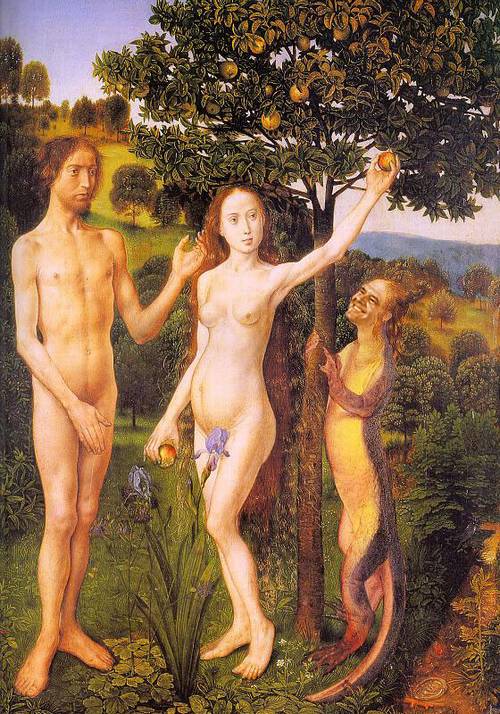
When we do go to heaven, I feel like taking away free will is going to be as if God were removing the burden of choice from our shoulders.  This however disturbs me, in that those who have not chosen God will be eternally damned.  That is a scary thought.  Lewis would like to believe that there is hope for those who choose to strive for a religion, or to learn more about the "why" of life, but there is no evidence for or against that desire.  In that sense I struggle to understand why we were given free will in the first place.  On that same train of thought, I would like to end with a question:  Did Adam and Eve have free will?  If they did, then their ability to go against God by eating from the tree in the center of the Garden makes sense.  Will there be a chance for failure in heaven?  (Another tree, if you will).  I certainly hope not, but am curious to see what things will be like.

Friday, January 21, 2011

A Colossal Network

Vocation is Calvin College's favorite word.  Yes, that is a bold statement.  But let us think about how coming to such a conclusion makes sense.  To start with, we have all of the beginning of the year quest orientation, in which you are ensured that you have time to, but need to choose your vocation.  Then students are moved on to Prelude in which they are taught a lot about integrating faith, school, and a liberal arts education.  All of which end up pointing to vocation.  Even now for another required course, all incoming students are reading a book in which it vividly explains vocation.  Let me be clear by taking a standpoint here, which is that I am not against calvin doing this.  In fact I would say all the talk of vocation actually is helpful to the average student, but that does not change my initial point.  Vocation is the word of Calvin.

When comparing the different ideas of vocation through each of the forms of education, I gather a sort of combined idea of what vocation needs to be in our lives.  So here goes:

From Quest I have learned that vocation is not definite.  God does not always say "This is what you will be doing for the rest of your life."  It is very rarely as simple as that.  When in a meeting with most of the sociology and social work professors, they went around the room explaining where they had all been before teaching at Calvin.  The variety of each one was immense!  There really was no framework for them to follow, each took a unique path.  If we choose to follow, God may not lead us down a direct path, but He will take us to where we should be.

From Prelude I have learned that vocation is something that needs faith and prayer.  Faith is sort of a given in vocation.  That is, our "destined position in the future" is based on our faith in God.  Faith is hard though, and sometimes prayers don't seem to be answered.  But praying is a necessity in this equation.  Learning to pray to God for guidance and advice is key.  God talks to us in the strangest of ways.  Prayers are often indirect communication, but sometimes are even a direct way that God will tell us where to go.

From Developing a Christian Mind I have learned that my vocation is something that needs to fit with other's.  Plantinga is a clear writer in that as images of God we have responsibilities (those being vocations), but that they should learn to coexist with those of other Christians.  We should not be easily broken standpoints that bend to the will of those around us, but with discernment at our sides, we should use each vocation as one small part of a gigantic web.  Let us stop thinking of vocations as career paths, and start to see them as organic journeys into a colossal network.

Thursday, January 20, 2011

Man or Rabbit?

The following is in part responding to C.S. Lewis' "Man or Rabbit?" If you are a random passerby, take a minute, and whether or not you read the short essay, feel free to comment, question, discuss, and/or debate.

This was one of C.S. Lewis' most blunt works that we have studied in this class.  Out of all of the pieces so far, this one was the most straight to the point, and if his words do not say it in themselves, the concise 5 1/2 pages shows it in a physical amount.  It surprises me that he combines being concise with such strong opinions, because Lewis' main method of argument has been to completely crush the opponent by exhausting all forms of attacks against his logic.  In this essay though, he makes a short statement as fact, solidifying certain parts of it to stone, and leaving other parts open, in order to make it infallible.

His attacks are very harsh (note that I actually call them attacks, because I believe he is attacking the character of those who he sees as condemned).  However, he is also quite interestingly placed in his logic, which makes me agree with him even more.  He is right in saying that those who do not look for a greater meaning in life are missing a large part of life, but I do not believe that he should condemn them, seemingly calling them useless individuals.  As if they are empty shells for avoiding one of the most important aspects of life.  Yes, they are missing the "big picture."  That does not mean that they miss all of the little ones.  They are still individuals that I have compassion for.

The one largest stumbling block in my faith is the seemingly contradictory love of God.  He created all of us individually and loves us all.  Yet even still he gives us free will, leaving it open for us to choose the way of evil, and be condemned to an eternity of suffering in hell.  One of my strongest issues with this is that I have a couple of friends who I honestly believe have eliminated the idea that Christianity has any ability to be true.  In each of their cases, it is based on different lead ups that helped them come to their conclusion.  Whether it was being raised in a strongly secular home that was avid in seeing Christianity as false, or something that they fought with while growing up and came to disbelieve through scientific research.  These people biblically are going to be condemned to an ETERNITY in hell.  That includes great people that have done a lot for others.  The extreme, and easiest example, is Ghandi, who biblically should be headed to hell.

C.S. Lewis mentions that he hopes God will have mercy on these sorts of people, as do I, but if there were to be one thing that really confused me as a Christian, it would be that.

Wednesday, January 19, 2011

Groups

The following is in part responding to C.S. Lewis' "The Inner Ring." If you are a random passerby, take a minute, and whether or not you read the short essay, feel free to comment, question, discuss, and/or debate.

We have all encountered different groups of people.  It is part of growing up.  As children, there is the difference between families; as high schoolers, there is the difference between band geeks, jocks, nerds, etc.; as adults, there is the difference between separate companies and social organizations.  In order to focus on the reading, the best thing to do will be to look at different types of groups.  The reason why I choose "group" as the word for defining each, is that I feel it is the most general term possible.  It is not meant to have any different connotations, and so its bland and vague denotation is what I will use in order to progress.

The first is a rejecting group.  It is an isolated "click."  This sort of group is a very bad sort which is not part of God's intention for community on earth.  In a rejecting group, there is the "in crowd" and the "outsiders."  This set up makes way for people who feel very comfortable while they are within the group, but then are less likely to branch out to others.  In addition, the outsiders feel a rejection (awkward, attacking, etc.) which leads the group to be a cut off from the rest of society.  This is a poor way to show community, yet it is disturbingly easy to sink into.

The second is an accepting, but hostile group.  Groups that are accepting allow people into them, but require, through social awkwardness or hostility that causes people to do wrong things they would not otherwise do.  A good example of this is a gang.  In a gang people are susceptible to peer pressure and generally do things that are illegal, or not worth doing.  In addition to this pressure, there is also situations in which leaving the group, especially in the case of a gang, can be a terrible process in which the leaver is the victim.

The third is an accepting group.  This group structure is exactly what God intended to have us all in from the beginning.  In this group type people can come and go freely, enjoying the company of others.  Accepting people for who they are and what they bring to the table.  It is extremely difficult to maintain a group such as this in a world filled with sin, but it is still the most proper style of group to be in.  In addition to being free, these groups have the lease possibility of hurt for the members within them that would otherwise be present in other group types.

I will end the different group types there, as I believe that those are the three groups most likely to be encountered throughout life.  As Christians, we should focus on the third style of group.  This can be hard to do, but it is well worth it when thinking of the benefits you are offering to others.

Tuesday, January 18, 2011

The following is in part responding to C.S. Lewis' chapter on Eros in The Four Loves. If you are a random passerby, take a minute, and whether or not you read the short essay, feel free to comment, question, discuss, and/or debate.

The English language is debilitating.  Although we have a complex alphabet, and tens of thousands of words (maybe even hundreds of thousands), and even still we are restricted to words that are already created.  This limits our vocabulary.  --On a short side note, why don't we just create a language where phonetic sounds mean specific things, that way one can actually piece words that haven't been created together?--  Anyways, in reference to Lewis' piece, the English word that I would like to have a squabble with is "love."  This word has so many meanings, from enjoying the look of a picture, to what a baby feels for those who care for it to the actual act of making the baby itself!  That miserable failure of language encourages people to turn to other languages in order to differentiate.

Often, that other language is Greek.  When looking at the four different words for love in Greek, one will still find issues of them not being specific enough.
The first is storge- which can be defined as a simple affection for something, or something that is forced, for instance, loving a tyrant.
The second is philia- which can be defined as a friendly love, something between two people that share a mutual affection for one another in a simple way.
The third is eros- which can be defined as sensual love, or the love significant others share.  This one however is especially debated, and as per the reading I will expound on, as it needs a more in depth description.
The fourth is agape- which can be described as the strongest sense of love people can share, or a love that is sacrificial in nature.

Even in the Greek language, which has, in this case, a four times more complex vocabulary, fails to completely separate each feeling.  Within eros, there are two different types of affection.  There is that of "love" (which can be seen as the word meaning strong feelings for a significant other), and "sensual" (which can be seen as the word meaning erotic feelings towards another).  Lewis points out this flaw himself by explaining the issue between them choosing eros for love, and venus for sensual, this is breaking of language barriers precisely as I would like to have done.  Eros is then redefined as the love between two people who would prefer nothing more than to share the world together, and venus is redefined as the erotic attraction to sex.

All I can say on this matter, is that Lewis' logic impressively prevails again.  Making more defined versions of the most amazing emotional complex is alluring.
The following is in part responding to Chapter 4 of Cornelius Plantinga Jr.'s Engaging God's World. If you are a random passerby, stop for a minute. Feel free to comment, question, discuss, and/or debate.

16 For God so loved the world that he gave his one and only Son, that whoever believes in him shall not perish but have eternal life. 17 For God did not send his Son into the world to condemn the world, but to save the world through him.

The story of redemption is a picture perfect one.  There are the broken people that choose the wrong actions, and there are the broken people who choose to follow a savior.  When the savior leads those who follow him to redemption, they are saved.  This story is simple.  There are no plot twists, nor open ended endings; there are no hidden characters, nor secret agendas; it is just straight forward.  Because this is such a simple story, however, it can be problematic to understand.  Why would an all powerful God commit to such a thing?

God could have defeated sin in any way he saw fit.  As an all powerful God, I expect evil is something that could hardly even affect him.  He did not need to come down from heaven and take up human flesh.  He did not need to give the world a savior on the ground.  This is where some parts of the story of redemption just does not make logical sense to me.  My brain is but infinitesimal to God's omnipotent knowledge, but it does not stop me from questioning his methods.  

Why did God promise a son to early generations when he likely could have just abolished parts of sin himself.  Why didn't God send a prophet that said "hey everyone, we don't need to sacrifice animals anymore, God has decided to let us now more easily ask forgiveness."  I was talking with my friend, and it is these sort of questions that become increasingly difficult to answer, because while on earth, we won't know.  While that all may be frustrating, it does not change my gladness that God did send someone to redeem us.  Whether a person sends me a chocolate in the mail, or hands it to me in person, I will still be glad for the gift.  God's amazing grace was not handing us chocolates though, it was handing us feasible access to eternal life.  What an insane concept!  

One of the things I will be most happy for in heaven, is when all these earth-dwelling questions get answered.  That will be one of the most interesting walks with God I am sure, and yet still it will only be the beginning.  (That is, if there even is a beginning to infinity).